Waze adds Gemini features and personalizes routes, voice and motorcycle navigation
Waze adds Gemini features and personalizes routes, voice and motorcycle navigation
Waze announced a group of features combining habit-based routes, a less-talkative mode, dedicated motorcycle navigation and new voice interactions powered by Gemini capabilities. The update is designed to make the app adapt more closely to vehicle type, driver preferences and the reports that keep its map current.
What happened
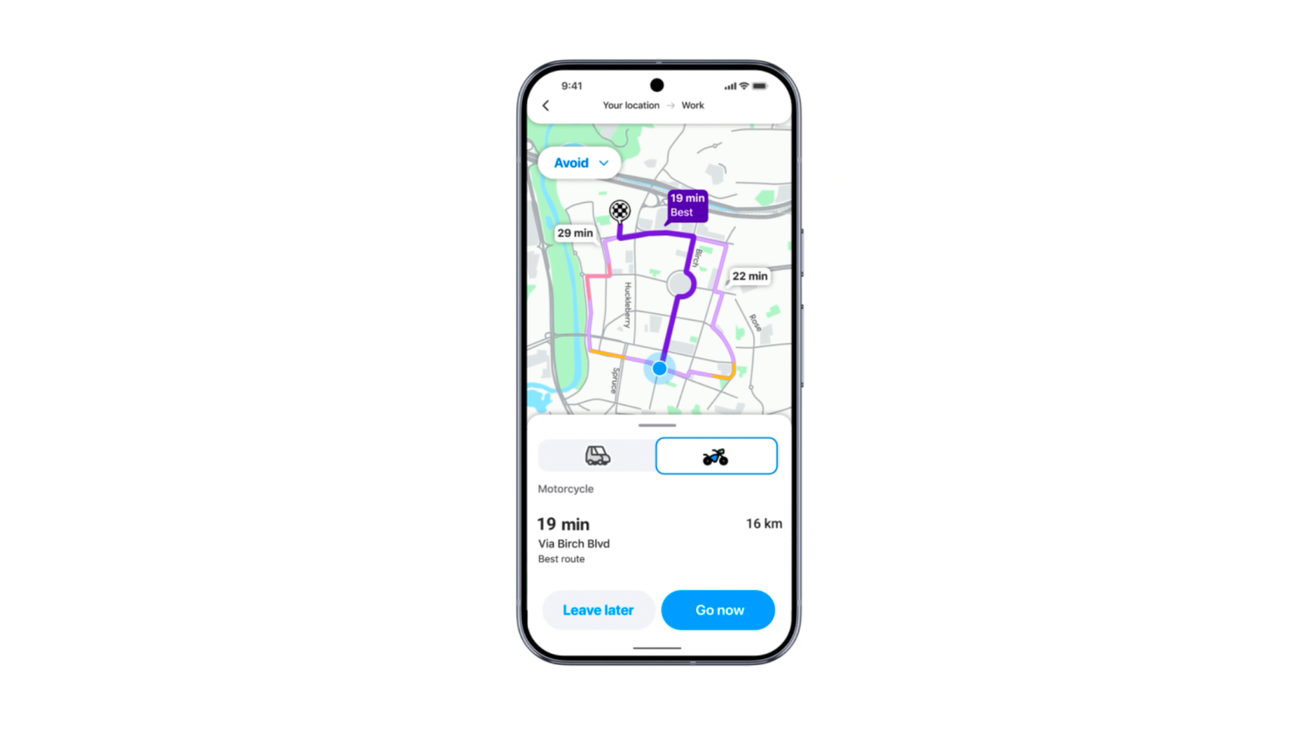
Google published a Waze Blog update on July 13 detailing five changes. The first is a motorcycle mode that uses artificial intelligence to incorporate two-wheeler shortcuts and restrictions. It also surfaces hazards that matter especially to riders, including potholes, speed bumps, raised crosswalks, shoulder endings and narrow bridges.
Motorcycle mode is initially rolling out on Android and iOS in Argentina, Brazil, Colombia, Malaysia, Mexico, Peru and the Philippines. Google says it combines real-time traffic information with contributions from a dedicated group of motorcycle map editors. It is not yet available globally.
Waze also began a global rollout of personalized navigation. The app can suggest routes based on previous trips in addition to its local traffic data. For example, if a person usually prefers highways over streets with multiple stops, that option may appear first. Personalization can be disabled, and users can still choose alternate routes.
The third feature is “less chatty,” a setting that reduces the number and length of voice prompts. The app will continue to provide critical reminders about hazards, turns and lane changes, but with fewer interruptions. Google says this option is also rolling out globally on Android and iOS.
Where Gemini fits
Not every announced feature depends on Gemini. The model’s clearest role appears in two conversational experiences. Waze is expanding Conversational Reporting so that, in addition to reporting traffic incidents in natural speech, a driver can suggest map changes such as a closed road or outdated address. Those suggestions go to local map editors, who must verify them before changing the map.
The other feature lets people search for destinations with more specific voice questions, such as finding an open coffee shop, parking near a mall or a nearby gas station with low prices. Waze returns options and lets the driver start navigation by voice. This Gemini-enabled destination search is launching first to the global beta community, not to every user.
Why it matters
The update shows a practical way to integrate AI into an everyday product. Instead of adding a separate chatbot, Waze is using models and behavioral data to reduce friction in specific tasks: choosing a route, speaking less during a trip, describing a road change or finding a destination without typing.
For users, the potential benefit is navigation that better fits the situation. For companies designing AI products, the case also offers a useful lesson: personalization works better when controls are visible. Waze allows users to turn it off, keeps alternate routes available and retains human review for changes to the map.
What changes for users and the AI ecosystem
Motorcyclists in the seven initial countries receive routes and alerts adjusted for two-wheeler risks. Other drivers may start seeing personalized routes and fewer voice prompts. Beta participants will get a more conversational destination-search experience.
From a product perspective, Waze is distributing AI across several layers: preference prediction, route ranking, voice interface and community map maintenance. That is more meaningful than a generic “AI” label because it defines where the system automates decisions and where it still depends on people.
What remains unclear
It remains to be seen whether personalized routes reduce travel time or mainly mirror existing habits, how motorcycle mode performs under real conditions and when it will reach more countries. There are also no independent evaluations yet of Gemini destination-search accuracy or the share of map suggestions accepted by editors. Google has announced the rollout and its limits; it has not demonstrated uniform benefits for every driver.
Written by Nova Rivera — Product and automation perspective.
Sources consulted
Google / Waze Blog; Engadget; PCMag. Exact canonical links appear in the Sources section below.
Sources: Google / Waze Blog, Engadget, PCMag