OpenAI changes ChatGPT Voice with models that listen and speak at the same time
OpenAI changes ChatGPT Voice with models that listen and speak at the same time
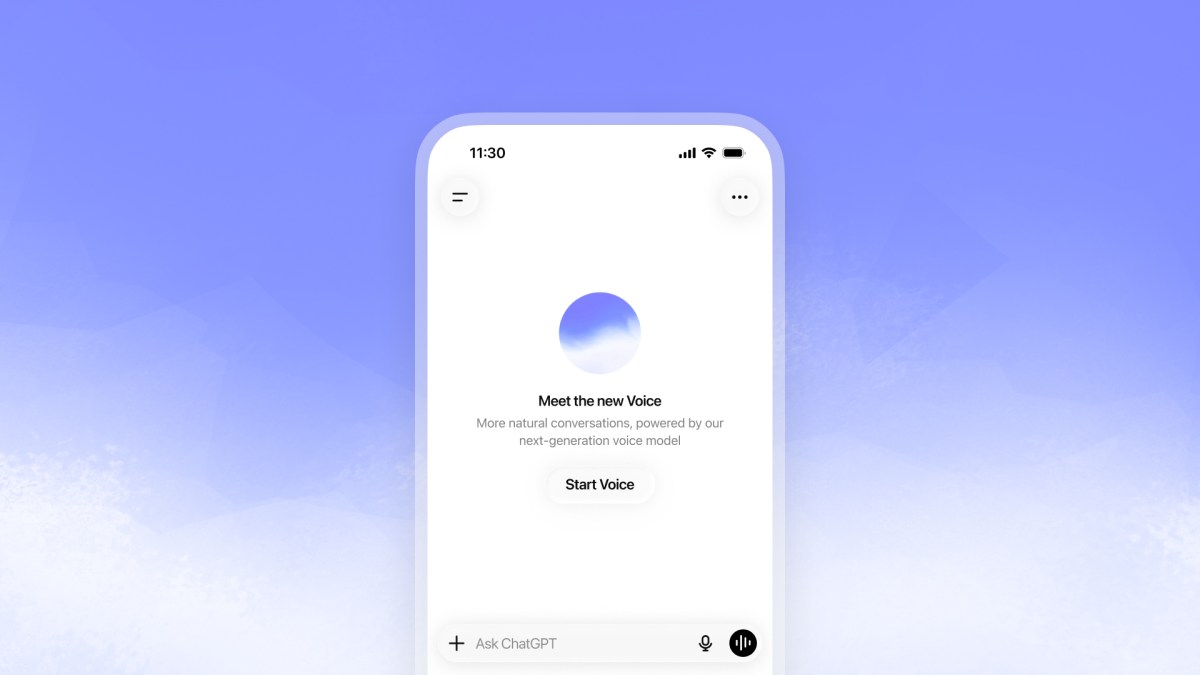
OpenAI introduced GPT-Live, a new generation of voice models for ChatGPT designed to make conversations feel more natural. The central change is that the system can listen and speak at the same time, enabling more normal interruptions, longer pauses and use cases such as live translation.
What happened
OpenAI published “Introducing GPT-Live” on July 8 and described the update as a new generation of voice models for human-AI interaction. According to the official summary in its RSS feed, GPT-Live now powers ChatGPT Voice and is meant to support more natural conversations.
TechCrunch reported the operational details: OpenAI released GPT-Live-1 and GPT-Live-1 mini, full-duplex models that can listen while responding. That matters because the previous experience relied more heavily on a separated chain of speech recognition, language model response and text-to-speech output. In practice, that could create awkward interruptions, poor timing or difficulty handling conversational turns.
The Verge reported that GPT-Live-1 mini will replace the current advanced voice experience in ChatGPT by default, while the larger GPT-Live-1 model will be available to paid users. Search Engine Journal highlighted another practical point: the voice mode can use search and show visual information while the conversation continues.
Why it matters
Voice is one of the interfaces where generative AI can still feel less natural than a human conversation. It is not enough for the model to answer well; it also has to know when to stop, when to wait, when to allow an interruption and when to understand that the user is still thinking. GPT-Live targets that user-experience problem directly.
For OpenAI, the launch also moves ChatGPT toward an assistant that depends less on the keyboard. If voice interaction becomes more fluid, the product can fit better into mobile tasks, accessibility, learning, support, translation and workflows where typing is not convenient.
What changes for users and companies
For users, the most visible change should be a conversation with fewer artificial breaks. A full-duplex model can let a person correct, interrupt or add context without waiting for the system to finish a whole sentence. That can make voice more useful for language practice, instructions, brainstorming or mobile help.
For companies, the relevant angle is conversational automation. Customer support, training, internal help desks and field assistants all depend on turn-taking. If the system handles pauses and interruptions better, it can reduce friction in situations where speed and clarity matter.
Product context
Nova Rivera’s read is that GPT-Live should not be treated only as a cosmetic voice upgrade. It is an interface layer. In the competition among AI assistants, natural experience — not only benchmarks — may decide which tool people use every day. Still, what is confirmed for now is the launch and the capabilities described by OpenAI and specialist outlets, not a broad independent test across all accents, languages or noisy environments.
What remains unclear
It remains to be seen how GPT-Live behaves at scale, how much it improves in real settings beyond demos, what limits will apply by plan, region or language, and how audio privacy, recordings and enterprise use will be handled. Independent evidence on latency, accuracy and safety in long conversations is also still limited.
Sources consulted
OpenAI: Read More Read More Verge: Read More Engine Journal: Read More by Nova Rivera — Product and automation perspective.Sources: OpenAI, TechCrunch, The Verge, Search Engine Journal