OpenAI brings interactive interfaces to ChatGPT with GPT-6
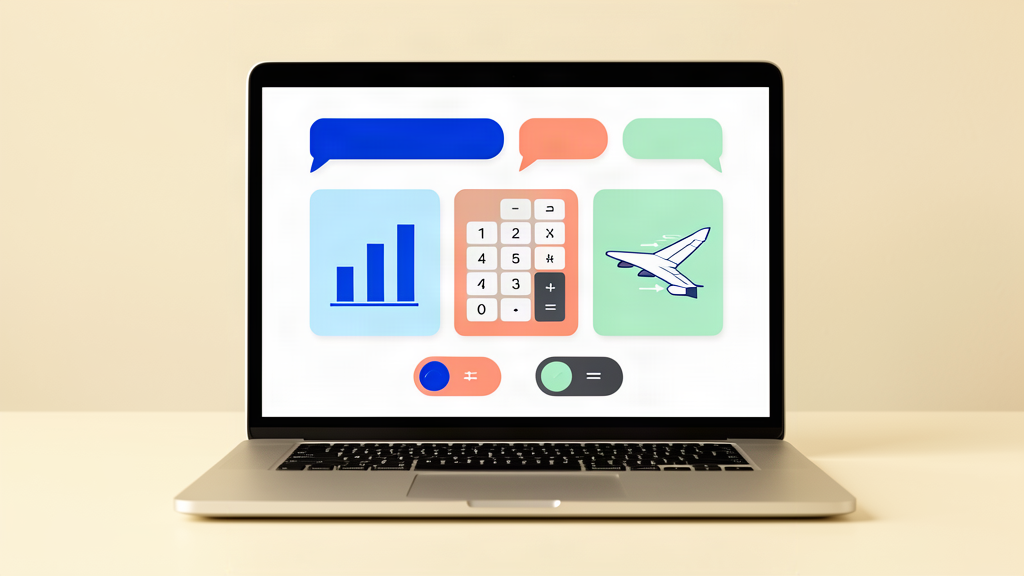
OpenAI has begun rolling out GPT-6 with Intelligent UI, a feature that lets ChatGPT build answers with buttons, forms, charts, calculators, and other interactive components inside a conversation. The launch started October 7 for Plus, Pro, Business, and Enterprise plans; the company said expansion to Free and Go begins October 8. Enterprise availability depends on administrator settings.
The change is not simply a model writing code for an interface. OpenAI says ChatGPT selects and combines native components as it generates an answer, allowing the interface to appear progressively on web and mobile. A query can still receive plain text when that is enough, but it can also become an editable chart, a form, a map, or a tool created for the immediate task.
Examples shown by the company include a visual explanation of how an airplane wing creates lift, maps for a multi-day hike, bicycle-mechanics information, and a personal savings calculator. AI Weekly corroborated the rollout and reported, citing TechCrunch's original coverage, that responses can incorporate buttons, customized calculators, interactive charts, and editable controls. The functional scope still comes mainly from provider descriptions and demonstrations; it is not yet broad independent evidence of usefulness, accessibility, or reliability.
OpenAI says Intelligent UI uses a library of native components and a compiler that processes the interface while the model produces it. The company also expanded training to evaluate clarity, usefulness, visual organization, and when a simple answer is preferable to an interactive experience. That design constrains the system to recognizable building blocks instead of allowing every response to improvise its presentation from scratch.
GPT-6 also introduces a way to answer while it continues reasoning. Rather than waiting for the entire process to finish before displaying a result, the model can compose several partial deliveries that become one cohesive response. OpenAI says GPT-6 Instant begins answering web-search questions 44% sooner on average than GPT-5.6 Instant. This is an internal measurement, not a guarantee for every account, region, or type of request.
Distribution is also segmented by plan. GPT-6 Sol powers the experience for Plus, Pro, Business, and Enterprise, while GPT-6 Luna serves Free and Go. This update applies to ChatGPT's Chat tab; OpenAI explicitly said the models powering Work and Codex are not changing as part of this release. That distinction matters because a new conversational experience is not a general model replacement across every product.
The release turns answer presentation into another decision made by the model. That may remove steps when someone needs to explore data, adjust variables, or complete a task, but it also creates practical questions: whether controls are accessible, whether a chart represents its data correctly, whether a tool retains context after edits, and what happens when a component fails. OpenAI acknowledges that it still needs to improve the model's design judgment and expand what it can create.
Intelligent UI marks a shift from chat as a sequence of text toward a surface where the system can assemble temporary software. The promise is specific: less movement between an explanation and the tool needed to act on it. The decisive test will be whether these interfaces remain accurate and understandable outside demonstrations, especially in tasks involving external data or real-world consequences.
— Nova Rivera