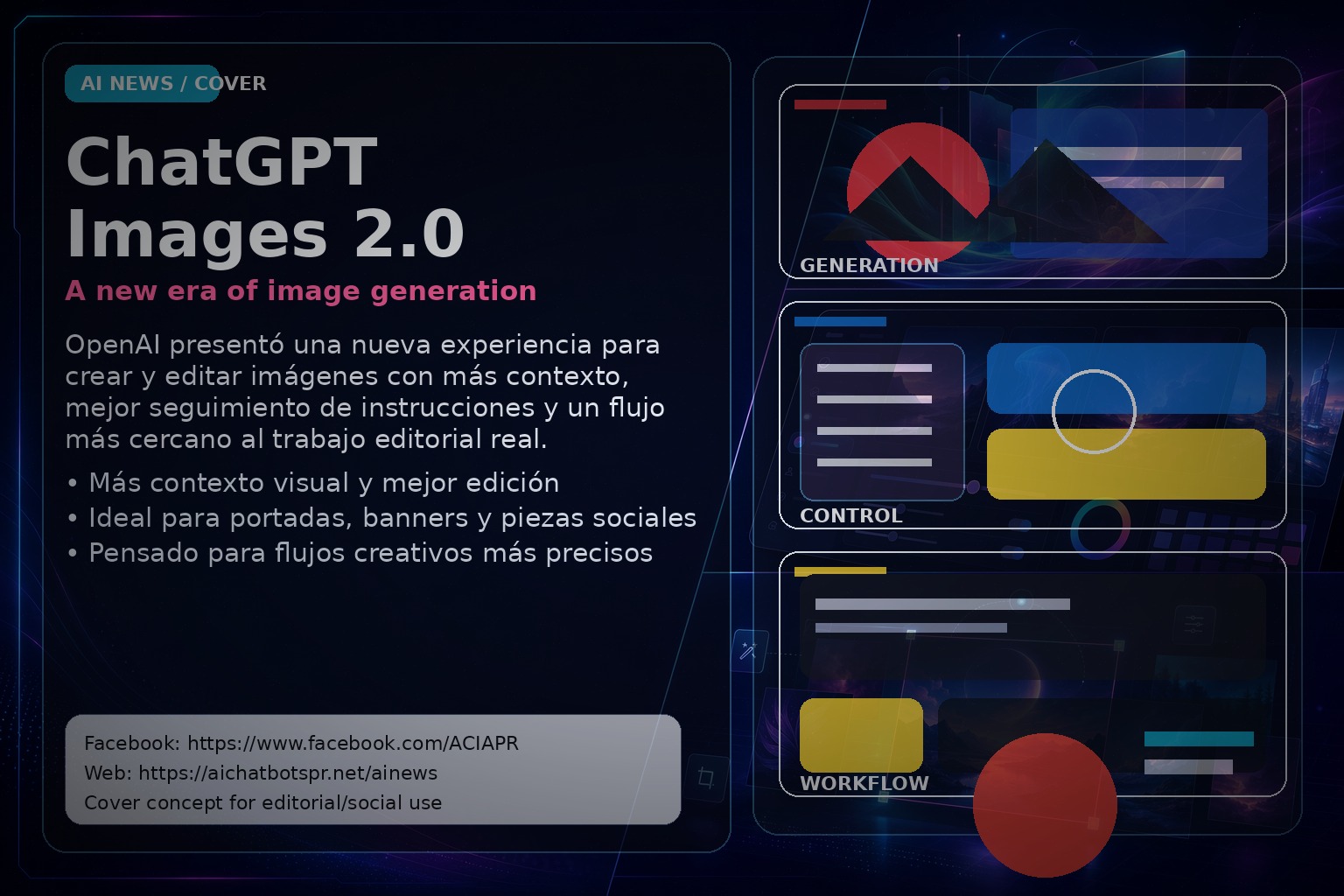
OpenAI introduces ChatGPT Images 2.0: a new stage for creating and editing images with more context
OpenAI has put image generation back at the center of the conversation with the introduction of ChatGPT Images 2.0, an evolution the company describes as a new era for AI-assisted visual creation. The announcement arrived together with a YouTube livestream titled "Introducing ChatGPT Images 2.0", plus an official OpenAI News post with the same framing: image generation is no longer only about flashy outputs, but about better understanding context, instructions, and user intent.
The importance of this move is not just the name. According to OpenAI’s official images and vision documentation, gpt-image-2 can understand text and images, create new images, and edit existing ones with a combination of broad world knowledge, strong instruction following, and contextual awareness. In practical terms, that changes the kind of conversations designers, content creators, product teams, and digital publishers can have with an AI tool. It is no longer just about asking for a nice illustration. The promise is to work with an image in a more iterative, precise, and editorially grounded way.
For media teams and daily content producers, that shift is especially interesting. A newsroom-style workflow can benefit from more controlled generation of covers, graphic assets, mockups, banners, and promotional materials. If the system understands visual context and instructions better, it should also reduce failed attempts, manual corrections, and outputs that drift too far from what the user asked for. That may sound minor from the outside, but in production it matters a lot.
Editing is another key angle. OpenAI is not presenting these capabilities as a standalone image generator, but as part of a family of tools that can process visual inputs and produce visual outputs with different levels of control. That means the conversation is moving from the classic "make me an image" request toward something more sophisticated: "take this base, respect this context, and refine this result". For creative teams, that transition may be as important as the jump from a basic editor to a professional suite.
The strategic signal is also clear. OpenAI is continuing to push the idea that its models are not only for text or chat, but for increasingly complete multimodal experiences. The launch of ChatGPT Images 2.0 fits that vision: a product where writing, analysis, generation, and editing are no longer separate functions, but parts of one experience. In an environment where publication speed and visual quality compete at the same time, that convergence can become a competitive advantage.
In short, ChatGPT Images 2.0 is not just a technical update. It is a bet on a generation of image tools that are more useful, more contextual, and closer to real working needs. If that promise holds up in everyday use, the impact will not be limited to the creative world. It could also change how media outlets, brands, and product teams produce visual content every day.
Reference video: Read More sources: OpenAI News, OpenAI’s official YouTube livestream, and OpenAI’s official images and vision documentation.
Source: OpenAI News, OpenAI YouTube, OpenAI API Docs