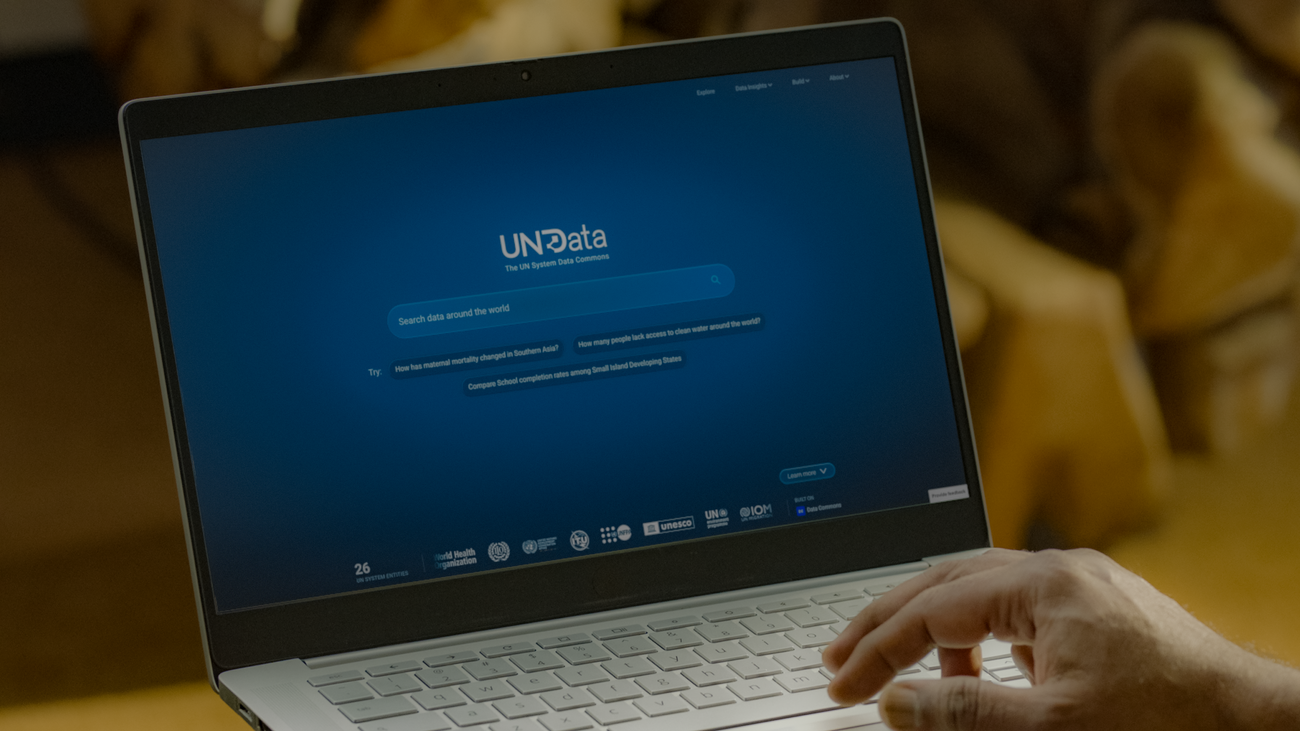
UN brings data from 26 entities into an AI-agent-ready platform
The United Nations has launched UN System Data Commons, an open platform that brings statistics from 26 UN system entities into one searchable knowledge graph. Available at data.un.org, it supports natural-language exploration and provides structured access for AI assistants and agents.
The platform addresses a practical problem: agencies including WHO, UNESCO, UNICEF, WFP and ILO publish high-value statistics through different formats, taxonomies and portals. Built on Google's open-source Data Commons platform, the UN implementation connects those datasets while preserving access to underlying institutional sources. Google.org supported the project through the UN Foundation.
Its AI layer does not create new statistics. It helps users and automated systems find, connect and present published data. Google says assistants can use the platform to assemble charts, infographics and draft reports, and highlights support for open standards such as Model Context Protocol (MCP). That can give authorized agents a structured route to retrieve UN figures instead of relying on unverified web text.
The safeguards remain important: an institutional source does not guarantee that an AI-generated answer interprets a figure correctly. Google explicitly advises users to review underlying sources before citing critical numbers. Definitions, update dates, geographic coverage and methodology can still complicate international comparisons.
UN System Data Commons does not replace every specialized agency portal, and its value will depend on coverage, update frequency and transparent metadata. Its broader significance for agentic AI is that it tackles a constraint beyond model capability: the quality, structure and provenance of the information an agent can retrieve.
Sources: Google Data Commons, United Nations — UN System Data Commons, Data Commons