UN scientific panel warns AI governance is not keeping pace with AI capabilities
UN scientific panel warns AI governance is not keeping pace with AI capabilities
The first preliminary report from the United Nations Independent International Scientific Panel on Artificial Intelligence delivers a direct warning: AI capabilities are moving faster than the rules, public evidence and oversight mechanisms available to manage them. The report does not call for stopping all innovation. It argues for a common scientific basis so governments and companies are not governing the technology blindly.
What happened
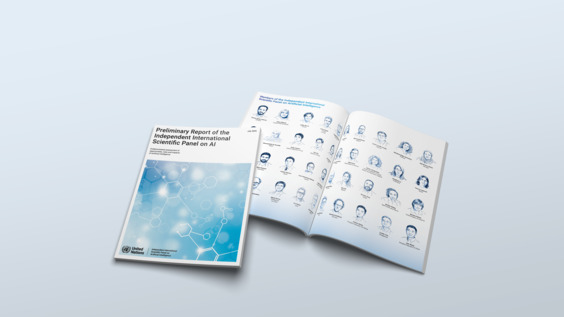
The United Nations launched the preliminary report of its Independent International Scientific Panel on AI on July 1. The expert body was created to assess the opportunities, risks and impacts of artificial intelligence through an independent scientific lens. The panel's official page describes the report as an early global assessment of AI capabilities, applications and emerging risks.
UN News summarized the message simply: AI is moving faster than governments can keep up. The technology is no longer limited to answering questions or generating text. It can write code, analyze vast amounts of data, create realistic images and videos, assist scientific research and increasingly act with more autonomy. The Guardian also covered the launch from the angle of global inequality, noting that uneven adoption could widen gaps between countries, sectors and communities.
Why it matters
The significance is not a new tool. It is who has enough evidence to decide how AI should be used. The report identifies a core challenge for policymakers: by the time evidence about a risk becomes fully clear, it may be too late to act. That tension matters in health, education, science, security, public information, human rights, work and child safety.
The responsible reading is two-sided. The UN recognizes that AI can accelerate medical breakthroughs, improve public services, support agriculture and expand educational capacity. It also warns that benefits will not distribute themselves automatically. If the most advanced systems, data, compute and talent remain concentrated in a small number of countries or companies, the productivity promise can coexist with new forms of dependency and exclusion.
What changes for users, companies and the AI ecosystem
For companies, the report reinforces that AI adoption can no longer be treated only as a productivity decision. It also involves traceability, risk evaluation, data protection, error monitoring, user transparency and the ability to explain when an automated system influences an important decision.
For governments and regulators, the panel points toward a more technical and less reactive conversation. Governance is not only about banning or allowing products. It requires measuring capabilities, understanding development trajectories, comparing evidence, coordinating standards and anticipating plausible harms without turning every extreme scenario into a certainty.
Social and strategic context
Lía Torres' reading is that this report marks a change in tone: AI is moving from a competitive-advantage debate into a social-infrastructure debate. If an automated system affects information, employment, safety, education or public services, the cost of not understanding it falls on people and institutions, not only on labs.
For business audiences, the practical point is clear: deploying models just because they are available is not enough. The strategic question is whether the organization can audit what the system does, limit it when it fails, explain its decisions and maintain human accountability as systems become more autonomous.
What remains unclear
The report is preliminary. It does not establish binding global regulation, does not prove catastrophic harm is inevitable and does not resolve disagreements between countries over safety, innovation, privacy or competition. Its editorial value is more specific: it creates a shared basis for discussing AI with evidence, not only commercial promises or abstract fears.
The next test is whether the Global Dialogue on AI Governance, scheduled in Geneva on July 6 and 7, turns that scientific warning into useful agreements, standards or follow-up mechanisms.
Sources consulted
UN panel preliminary report: Read More News: Read More Web TV: Read More Guardian: Read More by Lía Torres — Social and strategic perspective.
Sources: United Nations AI Panel, UN News, UN Web TV, The Guardian