NVIDIA and Hugging Face bring GR00T and Isaac closer to open robotics through LeRobot
NVIDIA and Hugging Face bring GR00T and Isaac closer to open robotics through LeRobot
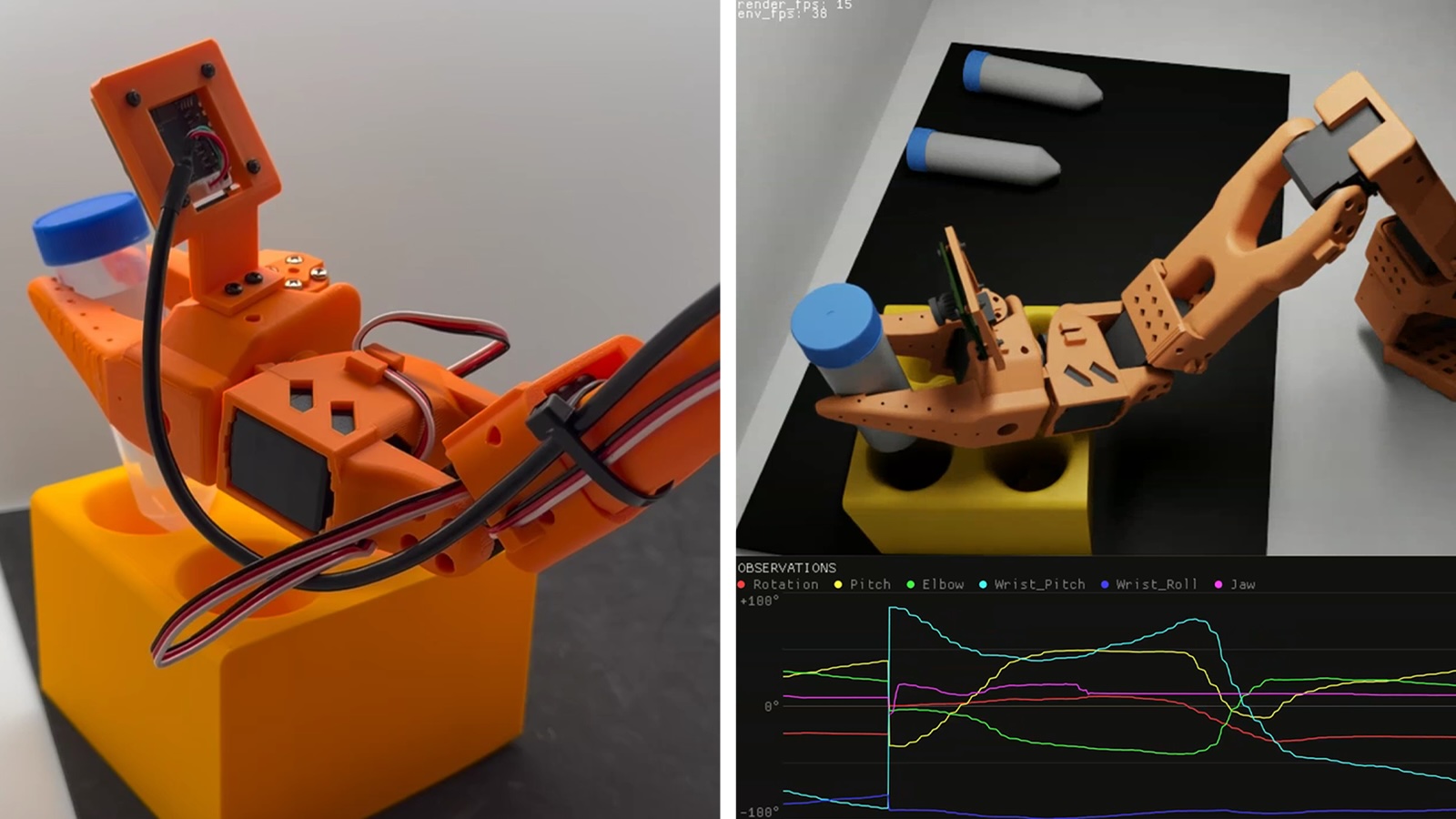
NVIDIA and Hugging Face announced July 7 integrations for LeRobot, Hugging Face’s open project for machine-learning models, datasets and tools for real-world robotics. The update connects parts of the NVIDIA Isaac ecosystem — including GR00T, Isaac Teleop, datasets and simulation workflows — with a community effort meant to lower the barrier to building and evaluating AI-powered robots.
What happened
In its official blog, NVIDIA said the new integrations give developers open access to NVIDIA Isaac GR00T 1.7, Isaac Teleop, datasets and robotics workflows within the LeRobot environment. The company also pointed to a planned NVIDIA Cosmos 3 integration to bring world models into open robotics development workflows.
Hugging Face published LeRobot v0.6.0 the same day, an update focused on imagining, evaluating and improving robotic policies. LeRobot documentation describes the project as a machine-learning library for real-world robotics in PyTorch, with models, datasets and tools designed so more people can contribute to and benefit from shared datasets and pretrained models. The GitHub repository frames the mission as making AI for robotics more accessible through end-to-end learning.
Why it matters
AI robotics is entering a phase similar to the one language models went through several years ago: the value is not only in one model, but in the full stack for collecting data, training policies, simulating tasks, deploying on hardware and sharing results. LeRobot is trying to become an open meeting point for that work. NVIDIA brings a key layer: simulation, teleoperation, generalist models and hardware used by labs and companies.
For developers, the signal is practical. If the integrations mature, it should become easier to test robotic policies with public datasets, move experiments between simulation and hardware, and compare approaches without rebuilding every part of the environment from scratch. For startups and automation teams, the news points to lower friction for robot prototypes that learn from demonstrations, teleoperation or simulated environments.
What changes for users, companies and the AI ecosystem
This does not mean any company can immediately deploy generalist robots. It does suggest that open robotics infrastructure is starting to organize around more reusable components: datasets, policies, simulation environments, base models and deployment guides. That could accelerate research, technical education and internal testing in sectors where physical automation still requires heavy specialized engineering.
It also changes the conversation around “physical AI.” Instead of treating it as an abstract promise, NVIDIA and Hugging Face place it inside a more concrete workflow: models trained or evaluated with shared tools, environments that can be registered and reused, and a community that can inspect code, datasets and policies.
Product and automation context
Nova Rivera’s read is that the story matters because of its platform layer. This is not a new consumer robot or a single demo. It is a bet on making AI robotics look more like open software: publishable, comparable and reusable components. If it works, the progress may be less about one specific robot arm and more about how different teams share the work needed for those arms to learn.
What remains unclear
The sources do not prove universal performance improvements or solve the cost, safety and reliability problems of production robots. It is also unclear how much adoption LeRobot will gain beyond the early technical community. What is confirmed is narrower: NVIDIA and Hugging Face are aligning models, tools and documentation to give open robotics a more accessible and connected foundation.
Sources consulted
NVIDIA Blog: Read More Face Blog: Read More documentation: Read More GitHub repository: Read More by Nova Rivera — Product and automation perspective.
Sources: NVIDIA Blog, Hugging Face Blog, Hugging Face LeRobot documentation, Hugging Face LeRobot GitHub