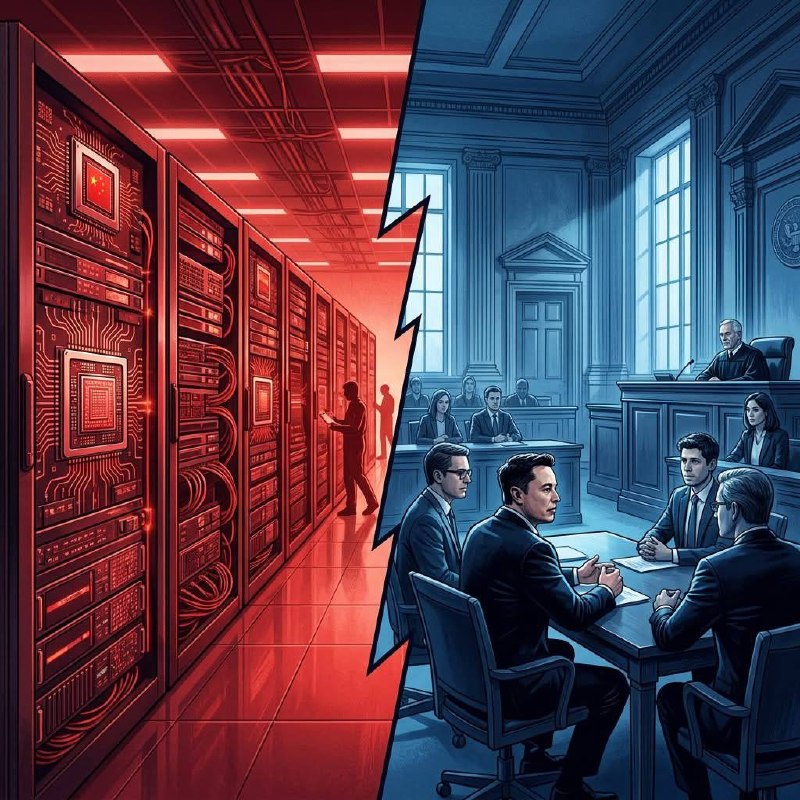
Jury rules in favor of OpenAI in Elon Musk lawsuit
The legal clash between Elon Musk and OpenAI ended this week with a result that strengthens the company and weakens, at least for now, the entrepreneur’s core argument. According to Reuters, a federal jury found that OpenAI is not liable in Musk’s lawsuit, in which he accused the company of drifting away from its original mission to benefit humanity. In plain terms: the jury did not give Musk the ruling he wanted.
The story matters because this case was never just a fight between famous former partners. For months, Musk has tried to turn the trial into a broader debate over OpenAI’s identity: whether it began as a public-interest project and whether it later shifted toward a more commercial structure. Reuters and AP have tracked the proceedings closely, and both accounts show how the conflict raised questions about governance, corporate control and legitimacy in the middle of the global AI race.
AP previously reported that Sam Altman had to defend his business record in the Oakland courtroom, where the case evolved into a high-profile dispute about the future of the company Musk helped found. In that context, the verdict does more than resolve a lawsuit. It also sends a signal about how courts may interpret claims that a tech company strayed from its mission when that company grew up under a public-benefit narrative.
That does not mean the underlying debate disappears. The Musk-OpenAI battle will remain relevant because it touches a sensitive issue: what happens when an organization built around public-good language ends up operating as one of the most valuable and influential companies on the planet. That tension between founding ideal and corporate reality is exactly what made the case so explosive.
For OpenAI, the ruling is useful because it allows the company to exit the trial with a legal win at a time when every reputational hit matters. For Musk, by contrast, the outcome narrows the reach of his courtroom strategy and pushes him to keep the fight alive through political, media or regulatory channels if he wants to sustain the argument about the company’s original mission.
Beyond the personal dimension between Musk and Sam Altman, the ruling leaves another important takeaway for the industry: the AI conversation is no longer limited to models, product launches or benchmarks. It also includes courtrooms, control structures, mission-driven lawsuits and the kind of power these companies concentrate. And when a jury decides that OpenAI is not liable in this case, the message is clear: the battle over AI’s future is also being fought in law.
Source: Reuters, AP News