Japan and NVIDIA plan national physical AI infrastructure with 27,500 Rubin GPUs
Japan and NVIDIA plan national physical AI infrastructure with 27,500 Rubin GPUs
Japan wants to turn its industrial expertise into a domestic platform for robotics and physical artificial intelligence. NVIDIA and Noetra announced a 140-megawatt Vera Rubin AI factory that will provide the computing foundation for FRONTia, a project backed by Japan’s Ministry of Economy, Trade and Industry.
What happened
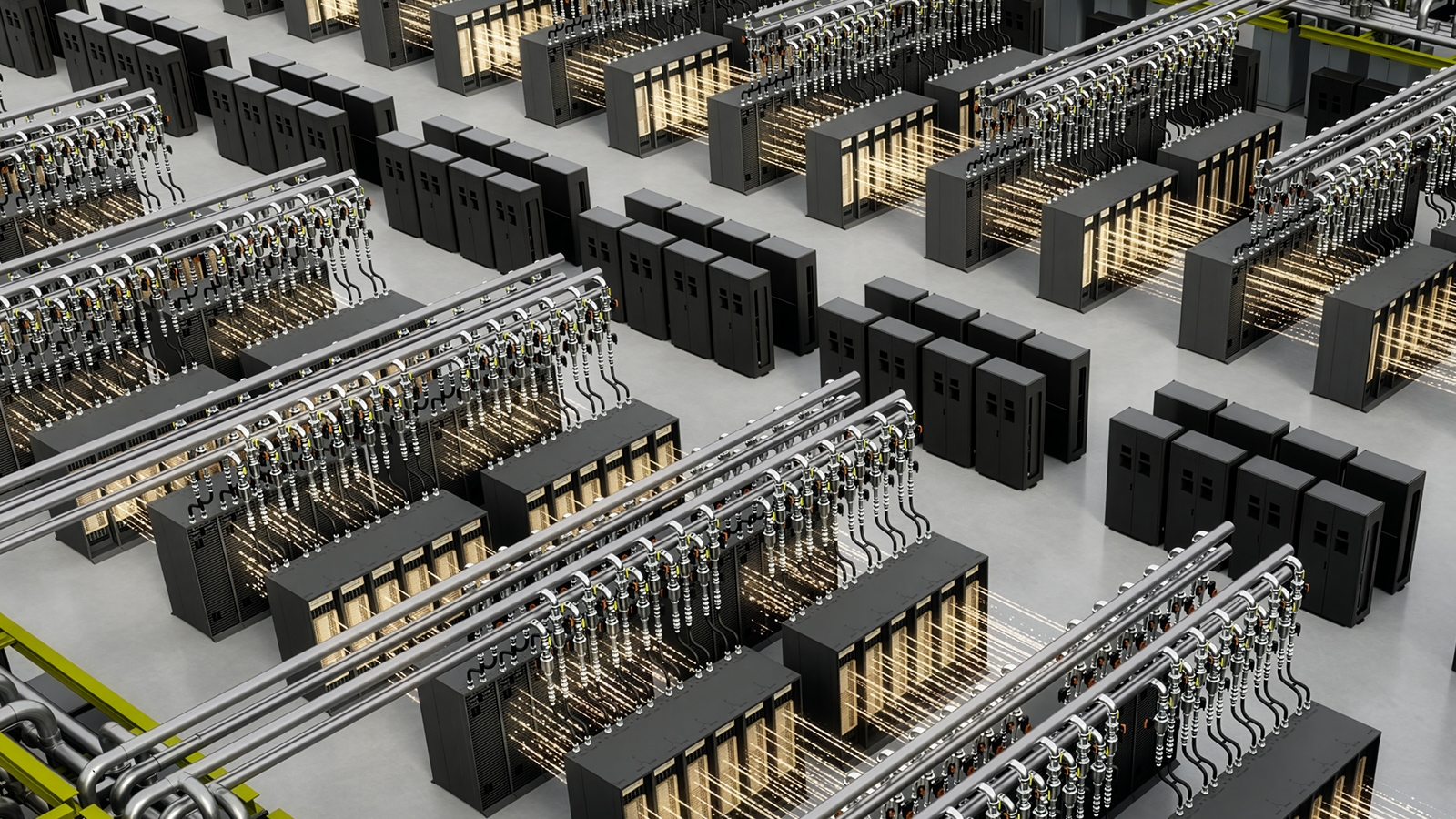
NVIDIA said on July 16 that it is working with Noetra Corp. to build an AI factory containing 13,750 Vera CPUs and 27,500 Rubin GPUs. The design will use Vera Rubin NVL72 racks, the DSX reference platform, Spectrum-X Ethernet networking and BlueField data-processing units. The facility is planned to reach 140 megawatts of data-center capacity.
The infrastructure will support Japan’s FRONTia project, formally titled “Development of Multimodal Foundation Models with a View to AI Robotics and Physical AI.” The METI-backed initiative is intended to combine the country’s industrial data, manufacturing know-how and large-scale compute to train models that understand text, images and signals from the physical world.
Noetra says the pretrained weights of its multimodal models will be made available to Japanese developers and businesses. The stack will also include NVIDIA tools and models such as Nemotron, Cosmos, Isaac GR00T and NeMo libraries. The stated goal is to support agents, digital twins, robots and other applications that interact with real environments.
Why it matters
This is more than a large chip purchase. The design connects three layers that are often discussed separately: national computing infrastructure, foundation models and industrial applications. Japan is betting that a shared base can help adapt AI to manufacturing, logistics, healthcare and telecommunications without relying exclusively on services built outside the country.
CNBC placed the announcement within NVIDIA’s broader expansion in Japan. The outlet reported new physical-AI initiatives, collaborations with industrial groups and the Cosmos 3 Edge model for robots and vision AI agents. That context supports the larger interpretation of the project: NVIDIA is offering not only accelerators but also models, software, networking and data-center designs.
For companies, infrastructure at this scale could lower the barrier to advanced training and simulation. A manufacturer could use digital twins to test processes before changing a plant; a robotics team could adapt models with local data; and software providers could build tools on shared weights. Those are possibilities enabled by the announced design, not operational outcomes that have already been proven.
What changes for users, companies and the AI ecosystem
The immediate change is institutional: Japan now has a coordinated path for developing physical-AI models with localized infrastructure and industry participation. For developers, the promise of locally available pretrained weights could shorten the distance between research and product testing. For NVIDIA, the project expands its role from GPU supplier to architect of complete AI factories.
It also raises the importance of measurements beyond traditional language benchmarks. In robotics and manufacturing, latency, safety, reliability in unexpected situations, sensor integration and the ability to validate decisions before execution all matter. System scale alone does not solve those problems.
What remains unclear
NVIDIA’s announcement did not provide the complete construction timeline, total project cost, access terms for businesses or the first applications expected to reach production. It also did not present independent evaluations of Noetra’s future models. Japan’s goal of capturing more than 30% of the global AI robotics market by 2040 is an industrial-policy ambition, not a guaranteed market share.
The description of this as the “world’s first national AI infrastructure for physical AI” also comes from NVIDIA’s announcement and should be understood as the participants’ framing. The project’s value will ultimately be measured by system availability, meaningful model access, industrial use and verifiable performance in physical environments.
Written by Nova Rivera — Product and automation perspective.
Sources consulted
NVIDIA Newsroom and CNBC. Exact canonical links appear in the Sources section below.
Sources: NVIDIA Newsroom, CNBC