Healthy Taiwan Brings AI Agents and Clinical Robots Into Hospitals With NVIDIA and Foxconn
While much of the global conversation around artificial intelligence is still dominated by chatbots and ever more powerful models, Taiwan is pushing the technology into a far more concrete arena: hospitals. NVIDIA, Foxconn and several of Taiwan's leading medical centers have announced the deployment of AI agents and clinical robots under the government-backed Healthy Taiwan initiative, an effort meant to move artificial intelligence from labs and demos into the daily operations of one of the most sensitive sectors any country has.
This matters because it is not just another software release or a vague promise of productivity. According to NVIDIA's announcement and follow-up coverage from TVBS English and GamesBeat, the program is tied to a hospital network handling more than 14 million patient encounters a year and is part of a broader $1.5 billion regional investment. The core argument is straightforward: in a fast-aging society facing clinical staff shortages, AI is beginning to be framed not as a luxury technology but as a tool for sustaining essential services.
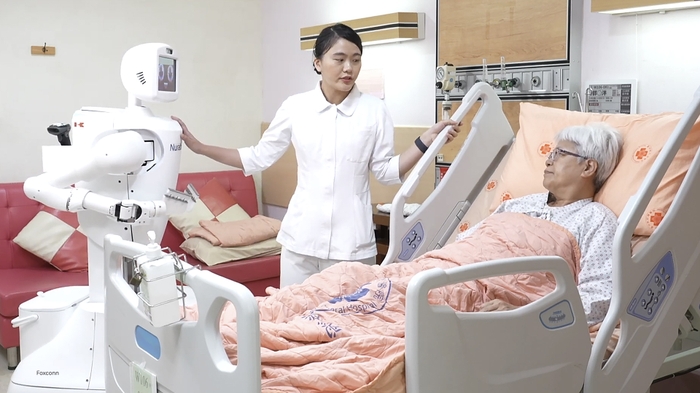
The approach combines two layers. First are software agents meant to assist with clinical reasoning, documentation, care coordination and operational workflows across hospital departments. Then come physical agents: robots and intelligent devices that can support logistics, monitoring and hospital-floor processes. In theory, that combination could free up time for doctors and nurses to focus on higher-value human work while reducing friction inside systems already operating under constant pressure.
That is what makes this more relevant than many AI stories built around eye-catching product launches. The real issue is not how impressive a model sounds, but whether the infrastructure can actually improve turnaround times, reduce administrative burden and help relieve healthcare bottlenecks. A chatbot can win headlines by sounding fluent, but a hospital system only earns legitimacy if it proves safe, reliable and measurably useful for patients and staff.
There is also a broader strategic reading. Taiwan is not presenting medical AI as an isolated experiment, but as part of a wider industrial and social agenda. That gives NVIDIA and Foxconn a powerful showcase: instead of merely selling chips or servers, they are presenting a national-scale use case in which AI connects hospitals, universities, hardware, data and real operations. For the industry, that may signal the next stage of the business: fewer office demos and more vertical deployments in sectors where returns depend on solving specific problems.
Still, major questions remain. Public metrics on time savings, error reduction, cost performance or sustained clinical improvements are still limited. In healthcare, technological enthusiasm is never enough. Any system that touches medical documentation, patient coordination or decision support has to meet serious standards for oversight, privacy, interoperability and accountability. The opportunity is enormous, but so is the risk of marketing transformation before implementation truly proves itself.
Even with that caution, the story deserves attention because it points to a more mature phase of AI adoption. After two years dominated by generative assistants, the market is starting to demand deployments where AI does not just speak well, but works inside complex institutions. For places under healthcare pressure — including Puerto Rico — that is where the real test of value begins.
Sources: NVIDIA Newsroom, TVBS English, GamesBeat