Google DeepMind releases AlphaGenome Atlas with predictions for 9 billion DNA variants
Google DeepMind releases AlphaGenome Atlas with predictions for 9 billion DNA variants
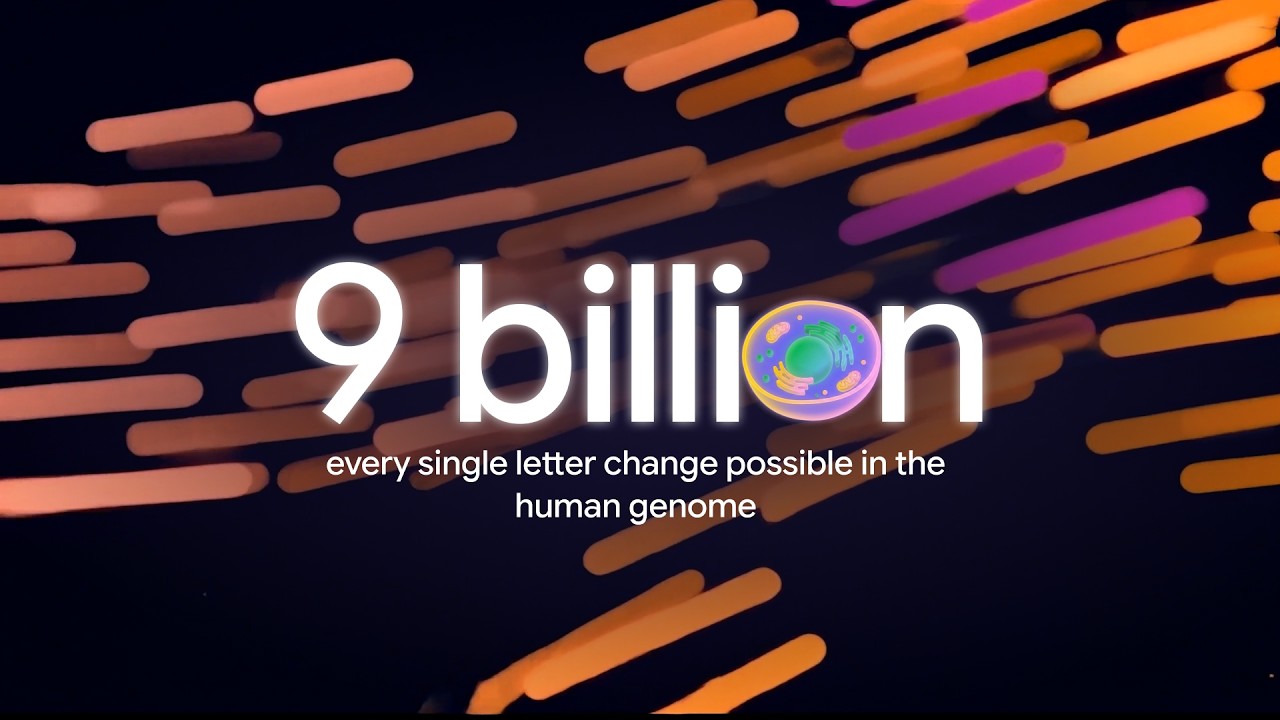
Google DeepMind introduced AlphaGenome Atlas on September 8, a catalog of predicted molecular effects for roughly 9 billion possible single-letter changes in the human genome. The resource contains one petabyte of data and lets researchers consult precomputed results rather than run the model separately for every variant they want to study.
The platform is available for noncommercial use through a web portal. DeepMind also announced access through the AlphaGenome API and a skill for its Google Antigravity agent platform. Commercial availability of Atlas on Google Cloud is coming “soon,” according to the company, which did not specify a date in its announcement.
A catalog of predictions, not diagnoses
The human genome contains roughly 3 billion base pairs. At each position, a DNA letter can be replaced by three alternatives, explaining the scale of the variants considered. Atlas does not represent 9 billion mutations observed in patients or individually tested in laboratories: it contains computational predictions of their potential molecular consequences.
The development is not a replacement for the previously released AlphaGenome model, but the computation and organization of its results at genome scale. In remarks reported by The Verge, DeepMind genomics lead Žiga Avsec explained that precomputing and analyzing such a large space of variants required additional time after the model was released.
The catalog covers protein-coding and noncoding regions, which can regulate gene activity. Its results span processes such as gene expression, RNA splicing and chromatin accessibility, with information for different tissues and cell types.
A score for prioritizing research
Alongside Atlas, DeepMind introduced AlphaGenome Variant Impact, or AVI. This score combines information from AlphaGenome and AlphaMissense, the company’s model focused on protein-altering variants, to help prioritize genetic changes by their predicted impact.
AVI does more than display a number. The resource also provides attributions that break down which biological features contribute to the score. Researchers can explore whether a signal is associated with predicted changes in RNA processing, gene expression or other mechanisms before designing experiments.
In the official video “AlphaGenome Atlas: Understanding the human genome,” published on September 8, researchers describe the practical goal as reducing the number of candidates that need closer examination. The presentation shows the web browser as an access route for biologists who do not necessarily write code. Easier access to predictions does not remove the need to interpret them in their biological context.
Early uses and limits of the evidence
DeepMind described a collaboration with Broad Institute researchers and the GREGoR Consortium to prioritize variants in rare disease research. According to the announcement, the analysis identified a variant in DNM1 that created an incorrect RNA splice site; experimental tests supported that specific prediction. This finding does not automatically validate every entry in the catalog.
Another example comes from University of Exeter researcher Gareth Hawkes, who applied the resource to data from more than 54,000 UK Biobank participants. DeepMind reports that grouping rare variants by their predicted molecular effects identified 22 percent more noncoding genetic associations. That figure describes the particular analysis, not a demonstrated general improvement for every disease or population.
The clinical limitation is explicit: DeepMind warns that AlphaGenome has not been validated or approved for clinical use, and that Atlas information does not replace professional medical advice, diagnosis or treatment. The release provides a tool for formulating and prioritizing hypotheses; it does not announce a diagnostic test or new treatments.
For laboratories, the concrete change is access to organized, searchable predictions without repeating the entire computation. Their scientific value will depend on which predictions withstand experimental validation, how they are interpreted in each context and which new questions they enable researchers to investigate.
Sources: Google DeepMind — Read More ; The Verge — Read More ; official Google DeepMind video — Read More
Sources: Google DeepMind, The Verge, Google DeepMind / YouTube