Google expands AI Mode with optional connections to everyday apps
Google expands AI Mode with optional connections to everyday apps
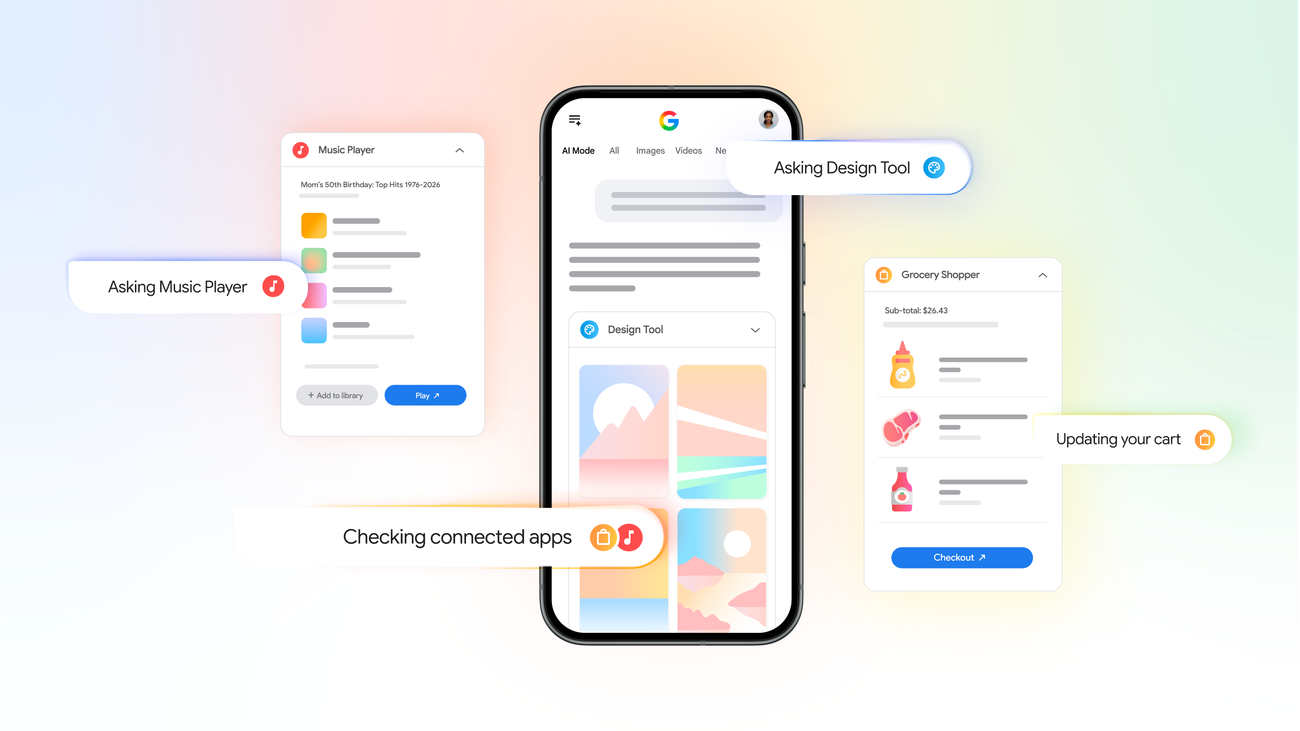
Google has begun rolling out optional connections between AI Mode in Search and services such as Instacart, Canva and YouTube Music in the United States. The update moves conversational search from answering questions toward carrying out concrete steps, although the initial scope is limited and depends on permissions, compatible accounts and regional availability.
What happened
Google announced on July 16 that AI Mode would let users link selected everyday services directly from Search. The rollout started that week for users in the United States. The company highlighted three initial examples: adding ingredients to an Instacart cart, asking Canva for template options for a project, and creating a playlist that can be saved to and played in YouTube Music.
The connection does not give AI Mode unrestricted ownership of those accounts. Google describes it as a user-initiated link to selected services. In a shopping example, AI Mode can help prepare and transfer items to a cart, but checkout takes place through Instacart's app or website. Google said it is working with more partners and plans to support additional apps, but it did not publish a complete timetable.
TechCrunch independently confirmed that the launch includes Instacart, Canva and YouTube Music and placed the move in a broader competitive context: ChatGPT and Claude also offer integrations or connectors for external services. That comparison is useful, but it does not mean every platform offers the same permissions, controls or ability to take action.
Why it matters
The feature turns Search into a coordination layer between an intention and an application. Instead of merely suggesting a grocery list, AI Mode tries to move that list into the service where the user can act. In design, Search can move from describing ideas to retrieving templates. In music, it can turn a request into a saved playlist.
That shift matters because assistant usefulness increasingly depends less on drafting answers and more on completing workflows. For app companies, becoming a connected service can create a new discovery and transaction channel. For Google, it increases the value of keeping users inside AI Mode while coordinating tasks that previously required switching among interfaces.
What changes for users, companies and the ecosystem
For eligible U.S. users, the immediate change is the ability to link compatible services and reduce steps in simple tasks. Convenience, however, should be evaluated alongside the permissions being granted. Before linking an account, users should review what data can be accessed, which actions are authorized, how access can be revoked and where a transaction still requires human confirmation.
For developers and companies, the announcement suggests that AI search is becoming a distribution platform. A useful integration will need identity controls, clear permissions, confirmations, activity logs and error handling. It must also prevent an ambiguous instruction from causing an unwanted purchase, publication or account change.
The update builds on earlier Google features. The company already allowed selected services to connect to Gemini and had introduced Personal Intelligence in AI Mode for more tailored responses using authorized data. The new step is bringing third-party apps into the Search workflow.
What remains unclear
Google did not provide a global launch date, a final partner list or uniform account requirements. It also did not publish independent evaluations of task accuracy, errors or execution friction. Availability may vary during rollout, and each app can impose different controls.
For now, the announcement demonstrates a product direction: AI Mode wants to move from answering to coordinating action. Its practical value will depend on pairing that convenience with understandable permissions, visible confirmations and reliable results.
Written by Nova Rivera — Product and automation perspective.
Sources consulted
Google and TechCrunch. Exact canonical links appear in the Sources section below.
Sources: Google, TechCrunch