The ECB finds a gap between using AI and being transformed by AI
The ECB finds a gap between using AI and being transformed by AI
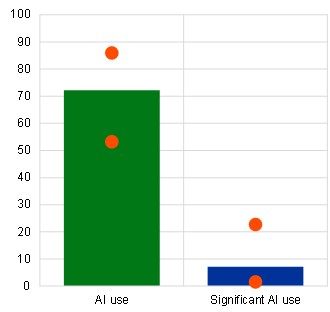
The European Central Bank published an analysis of artificial intelligence adoption among euro area firms: more than 70% reported using AI at the end of 2025, but only 7% said they used it intensively. That distinction matters because the economic value of AI is not created merely by installing tools; it depends on integrating them into core processes, innovation and new services.
What happened
On June 24, the European Central Bank blog published “What separates firms that use AI intensively from firms that don’t?”, an analysis based on SAFE — the Survey on the access to finance of enterprises — covering more than 5,000 firms across euro area countries. Reuters also reported the same day on the main finding: intensive AI use remains rare among European firms.
The central signal is clear. Broad adoption is already happening: according to the ECB, more than 70% of surveyed firms said they used AI in the last quarter of 2025, and nearly half of those not yet using it planned to invest in 2026. But “significant” or intensive use was only 7%. That gap separates everyday experimentation — automating tasks, testing assistants, reducing costs — from deeper operational transformation.
Why it matters
The analysis grounds a debate that is often framed as if “AI adoption” were one single thing. It is not. A company can use AI to draft text, summarize email or answer internal questions without changing how work is organized. Another can embed it in research and development, product design, customer support, data analysis, quality, planning or service expansion. For the ECB, firms using AI in core processes are more likely to generate productivity and growth.
That matters for users, companies and governments because the macroeconomic impact of AI depends on that second stage. If most organizations remain at the peripheral-use level, the expected productivity boost may take longer to show up in real outcomes. The analysis also suggests that complementary capabilities — data, digital infrastructure, technical talent, clear processes and an innovation culture — matter as much as the tool itself.
What changes for companies and adoption teams
For business leaders, the practical message is that the question should not be only how many licenses or copilots have been activated. The better question is where AI is changing decisions, product cycles, team coordination or value creation. The ECB notes that intensive users more often cite employment growth, support for research and development, and expansion of products and services as reasons for using AI.
There is also an interesting nuance: intensive use is not only concentrated among the largest companies. While firm size increases the likelihood of adopting AI, the ECB analysis says intensive use appears relatively more often among small firms that already adopted it, and also more often among young firms. Service sectors, especially information and communication, show a higher presence, which is consistent with their access to data, infrastructure and digital skills.
Strategic reading
From a social and strategic perspective, the ECB gap is a warning against two extremes. The first is assuming AI has already transformed the whole economy because it appears in many tools. The second is dismissing its impact because many pilots remain superficial. What is confirmed is more specific: diffusion is moving quickly, but deep integration remains a minority pattern.
That pattern can shape training, digital investment and productivity measurement. It also makes AI adoption an organizational process, not just a technology purchase. If companies do not redesign workflows, prepare data and build internal capabilities, AI can remain an extra software layer with limited results.
What remains unclear
The ECB blog does not by itself prove how much European productivity will rise, nor that every company should accelerate AI in the same way. The survey measures reported adoption and reasons for use, not an external audit of performance. It also does not resolve employment, governance, security or quality risks that may emerge when AI enters core processes. What it does provide is a useful distinction: using AI is not the same as being transformed by AI.
Sources consulted
European Central Bank official blog: Read More Central Bank SAFE survey page: Read More coverage recorded in Google News: Read More by Lía Torres — Social and strategic perspective.
Sources: European Central Bank, European Central Bank SAFE, Reuters