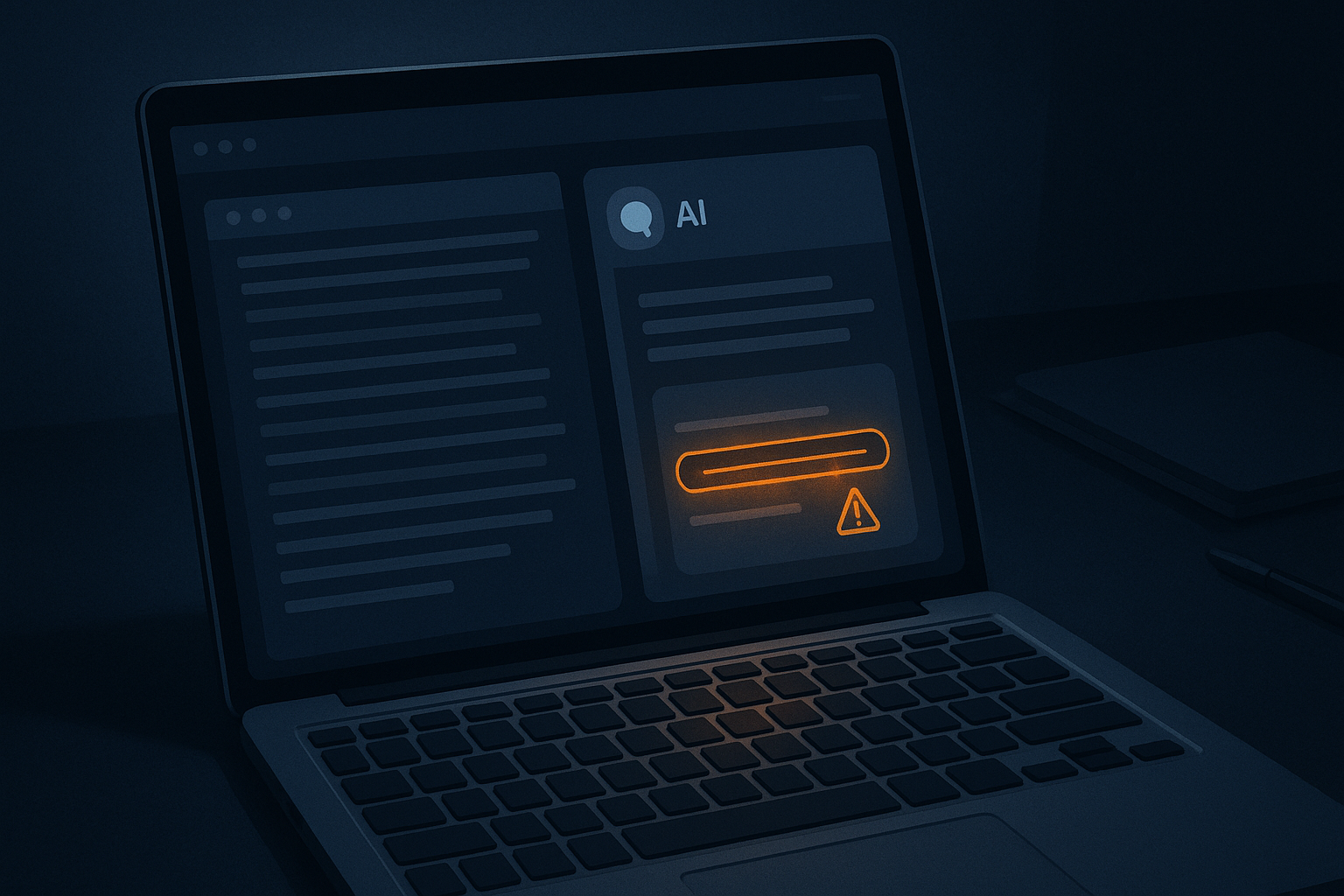
ChatGPhish: the alert turning web pages into phishing traps inside ChatGPT
Artificial intelligence has become a trust layer for millions of people who use it every day to summarize articles, review documentation, understand code, research complex topics, and move through information faster. But that same trust layer is opening a new security front. Research published by Permiso warns that any web page a user asks ChatGPT to summarize could become a phishing vehicle if malicious content slips into the assistant response shown inside ChatGPT itself.
## What ChatGPhish is and why it matters
The technique has been dubbed ChatGPhish and goes beyond a classic prompt injection story. According to Permiso researcher Andi Ahmeti, the issue is not only that the model can be influenced by malicious instructions embedded in a page, but that the resulting content may be displayed inside an interface the user already trusts: ChatGPT.
That distinction changes the weight of the finding. The issue is not just what the model reads, but how the model later presents it. If users see links, alerts, or visual resources embedded inside an assistant response, they may treat them as legitimate even when they originate from attacker-controlled content.
## How a web page can become the payload
The research describes a scenario in which an attacker adds a small malicious payload to a public page. That page could be a GitHub README, a documentation page, a blog post, or a seemingly legitimate landing page. If a victim visits that content and then uses a ChatGPT page-summary flow from the browser, the page can influence the model output.
Permiso argues that when a system ingests external content and then renders it inside the assistant response without clearly separating source material from model-generated material, it creates a dangerous trust transfer. In the published demonstration, Firefox served as the entry point to trigger the summarize-page flow, although the researchers stress that this should not be read as a browser vulnerability. The deeper issue is the product design around reading, summarizing, and rendering.
## The risks: fake links, spoofed alerts, and QR codes
The report identifies several concrete attack paths. One is the most obvious: malicious links rendered as clickable elements inside the assistant response. Another is the appearance of fake alerts styled as legitimate warnings, written in a tone and layout that can feel like part of ChatGPT itself.
A third important risk is the use of remote images and QR codes. Permiso says automatically loaded images could act as tracking beacons, leaking data such as IP address, User-Agent, Referer, and the exact moment the answer was rendered. In the QR code scenario, the risk becomes more serious because it shifts the attack from the desktop to the phone, bypassing several protections users normally expect from browsers on their main device.
## Why this matters beyond ChatGPT
What makes this story especially relevant is that it is not only about one bug or one product. It points to a broader issue: more and more AI assistants are becoming an intermediary layer between users and the web.
That means it is no longer enough to think only about malicious websites, suspicious emails, or dangerous downloads. We also have to think about what happens when an AI system scrapes, summarizes, rearranges, and presents external content inside a conversational interface. If that layer inherits user trust, it also inherits value for attackers.
The Register emphasized this point by noting that AI products increasingly resemble a browser or even a lightweight operating environment, with more capabilities, more context, and therefore a larger attack surface. The Hacker News likewise stressed that an otherwise normal web page could turn ChatGPT into a phishing surface.
## What researchers disclosed and the state of the case
Permiso included a disclosure timeline saying it first reported the issue to OpenAI on April 29, 2026 through Bugcrowd. It later submitted an expanded version of the report on May 1 with more reproduction details and broader impact context, and finally published the research on May 29.
According to that report, the issue was first marked “not reproducible” and later classified as a duplicate. The Register added that it did not receive public confirmation from OpenAI on whether the issue had been fully fixed at the time of coverage. That matters because the story is serious, but accuracy still requires caution about the exact mitigation status.
## The lesson for users and companies
For everyday users, the conclusion is simple: not everything displayed inside an AI response should automatically be treated as trustworthy. A clean conversational interface does not mean the content originated from the assistant or that it is safe to click.
For companies, security teams, and developers, the lesson is broader. Web-retrieved content should be handled as untrusted input. If a system summarizes pages, renders Markdown, auto-loads images, or exposes links inside an AI interface without enough source separation, it can become a new delivery layer for phishing, tracking, and manipulation.
## A trust problem, not just a cybersecurity problem
The promise of AI assistants is to save time, reduce friction, and simplify complex tasks. But that same convenience can strip away warning signs that used to help users detect threats. That is the deeper significance of ChatGPhish: it is not only a cybersecurity story, but also a warning about how risk changes when user trust shifts from the open web to a conversational interface.
As more people rely on AI to research, summarize, and decide which links to open, the design of those experiences stops being only a product choice and becomes a security issue. If external content is not clearly separated from assistant output, convenience can become vulnerability.
Sources: Permiso, The Hacker News, The Register, Cyber Security News