US banks block outside AI agents to prevent unauthorized movement of money
Charles Schwab and JPMorgan Chase are blocking third-party artificial intelligence agents that attempt to enter customer accounts or act on them. The decision sets a concrete boundary for the emerging generation of agents: they may help research and organize information, but financial institutions are not granting them automatic authority to move money.
Charles Schwab CEO Rick Wurster said in a Bloomberg interview published October 16 that he receives a weekly report about these attempts. According to the executive, Schwab blocks quantities in the “tens and twenties” of attempts by major AI agents seeking to interact with customer funds. Coverage of the interview identifies Meta’s Muse as one example Wurster mentioned. [1]
The figure requires an important distinction. The reports describe blocked attempts, not completed transfers or losses of funds. They also do not, by themselves, establish that an AI provider directed an intrusion. The problem identified by the bank is authorization: a customer can hand credentials to an outside service while Schwab cannot adequately verify or control which actions that agent will execute.
Wurster framed the concern in terms of control and liability. If a person gives a password to an agent and it acts on the customer’s behalf, it may be difficult to determine who authorized each step, how to stop the activity, and who is responsible if something goes wrong. JPMorgan has also confirmed that it blocks outside agents from accessing account information because of security concerns, according to Bloomberg and subsequent reporting by The Verge. [1][2]
Schwab is not rejecting every AI integration. Its approach separates inquiries from transactions. The firm directs customers to Charley, its own assistant, which is limited to informational and administrative work. For partner external language models, it is developing servers based on the Model Context Protocol, or MCP, that can provide read-only access to balances and research while withholding the ability to transfer money. [3]
That architecture turns the principle of least privilege into a product decision: an agent receives only the tools required to answer a question, not broad permissions over an account. It also reduces reliance on shared passwords, which can obscure whether an action came from the account holder, a model, or another component connected to the agent.
The resistance extends beyond banking. The Verge reported on October 17 that Amazon, Yelp, and Delta have also restricted third-party agents in areas where they try to complete tasks. Their policies are not identical: some companies block particular tools, others condition access on commercial agreements, and some reject outside automation. The common pattern is that websites are defining their own rules before a broadly accepted standard exists for agent identity, consent, and liability. [2]
The development exposes a gap between the promise of agents able to shop, book travel, or manage finances and the trust infrastructure required to let them do so. A model’s ability to navigate a website does not mean it has verifiable permission to execute a transaction. In regulated services, user identity, the scope of authorization, and an auditable record of every action are requirements separate from the model’s technical capability.
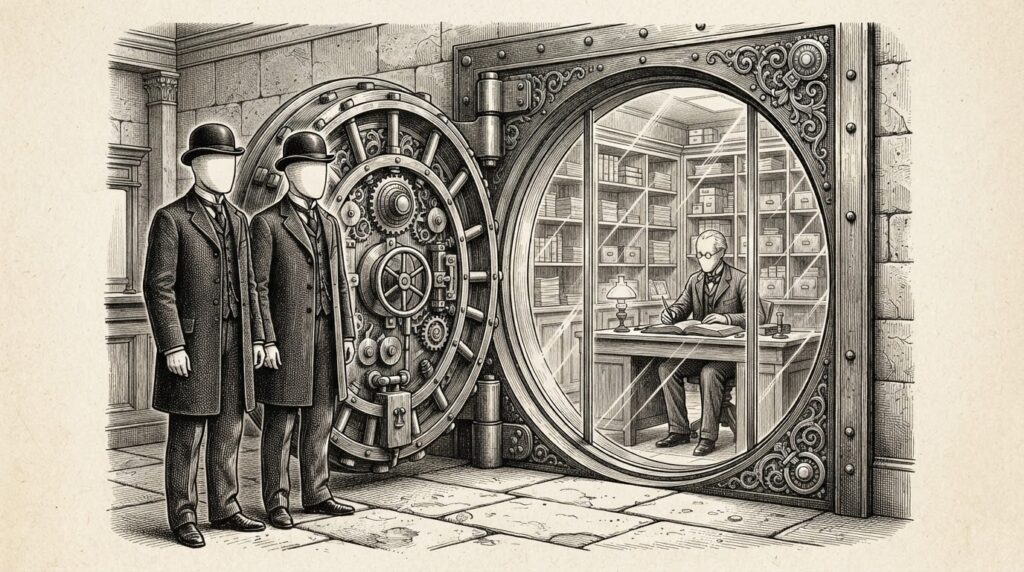
For now, the boundary drawn by Schwab and JPMorgan is deliberately conservative: observation may be acceptable under controls; action on funds is not. The next step depends on more than increasingly capable models. It requires delegated credentials, granular permissions, human confirmation for sensitive operations, and mechanisms that revoke access without sharing the primary password. Until those controls become common, agents trying to move from assistants to financial operators will continue to find the door closed.
Sources
[1] Read More — US Banks Block AI Agents Attempting to Move Money for Customers — Bloomberg
[2] Read More — Websites are closing their doors to AI agents — The Verge
[3] Read More — Schwab and JPMorgan Block Unauthorized AI Agents from Moving Money — Forkast
Sources: US Banks Block AI Agents Attempting to Move Money for Customers — Bloomberg, Websites are closing their doors to AI agents — The Verge, Schwab and JPMorgan Block Unauthorized AI Agents from Moving Money — Forkast