Anthropic adds a dashboard for reviewing how you use Claude
Anthropic adds a dashboard for reviewing how you use Claude
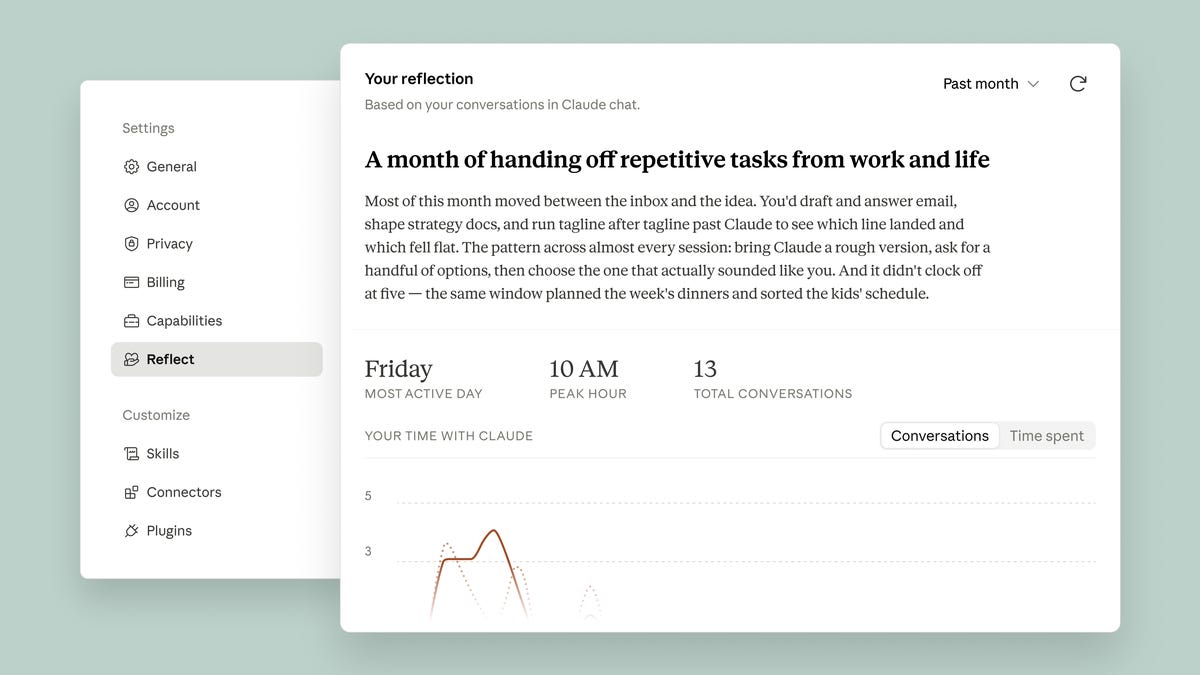
Anthropic introduced a beta reflection feature for Claude that lets users see patterns of use, frequent topics and periods of high activity inside the assistant. The tool can also help set quiet hours or break reminders, a sign that major AI platforms are beginning to treat everyday use as a question of habits, not only productivity.
What happened
Anthropic announced “Introducing a way to reflect on how you use Claude” on July 9. The company says the feature is meant to help people understand how they integrate Claude into daily life: when they use AI, what tasks they use it for, how often they use it and whether that use aligns with their goals.
The dashboard appears in Settings on Claude for web or the desktop app. According to Anthropic, it summarizes key topics, usage patterns and types of tasks over one, three, six or twelve months. The company also says it will add a view of time spent and that the feature can surface reflection questions, such as what a person wants to keep doing themselves even if Claude could do it faster.
CNET described the feature as a beta developed with wellness experts and noted that it can remind users to log off. The Verge compared it to a kind of “Claude Wrapped” because it turns usage history into a summarized view of habits and activity.
Why it matters
This is not only a new chatbot feature. It shows a shift in how AI companies present their products: not only as tools for doing more, but also as systems that can measure and shape the user’s relationship with technology. That matters because AI assistants are moving into work, study, writing, personal planning and everyday decisions.
For users, a reflection dashboard can offer a useful signal: if Claude is being used to learn, organize ideas or automate repetitive tasks, the person can see that more clearly. But it also raises sensitive questions about what data is summarized, how those patterns are explained and how much real control the user has over that interpretation.
What changes for users, companies and the AI ecosystem
For individual users, the feature can act as a mirror of habits: which days they use Claude most, which themes repeat and whether the tool is taking over spaces that used to be reserved for concentration, rest or human work. Break reminders and quiet hours point toward a less compulsive relationship with AI, although their effect will depend on whether people configure and respect them.
For companies, the launch points to a broader conversation about responsible adoption. If AI assistants become part of daily workflows, measuring productivity will not be enough. Organizations will also need to understand dependence, decision quality, privacy, digital well-being and boundaries of use.
Social context and analysis
Lía Torres’s read is that Anthropic is trying to occupy a space beyond “use more AI.” The company presents Claude Reflect as a tool for observing usage and making more conscious choices. That may be positive, but it does not remove the tension: the same system that helps summarize habits also depends on analyzing previous user activity.
For that reason, the story should be framed carefully. Anthropic says the feature lets users review patterns and adjust preferences; secondary sources describe its initial function. It has not been proven that it reduces dependence, improves well-being or changes habits in a sustained way.
What remains unclear
It remains to be seen how the beta works for different types of users, what privacy controls are visible in practice, how generated summaries are explained and whether companies or schools will set policies for this type of usage analytics. Independent evidence on whether nudges and quiet hours actually change behavior is also still missing.