Anthropic releases Claude-built optimizations for more than 30 biomolecular models
Anthropic has released code optimizations built with Claude for more than 30 open-source computational biology models. The company says an internal general-purpose research model completed the work in under four weeks, producing roughly 4x average speedups with minimal precision loss and nearly 2x speedups when preserving identical outputs.
Rather than replacing specialist scientific models, Claude modified the software researchers already use for structure prediction, protein design, genomics and protein language modeling. The public repository includes reference kits for tools such as Boltz-2, ColabFold, ESMFold2, RFdiffusion and Protenix, with exact, fast and big modes. Anthropic warns that this is an as-is reference release, is not maintained, executes upstream code and requires users to review each dependency's license and security posture.
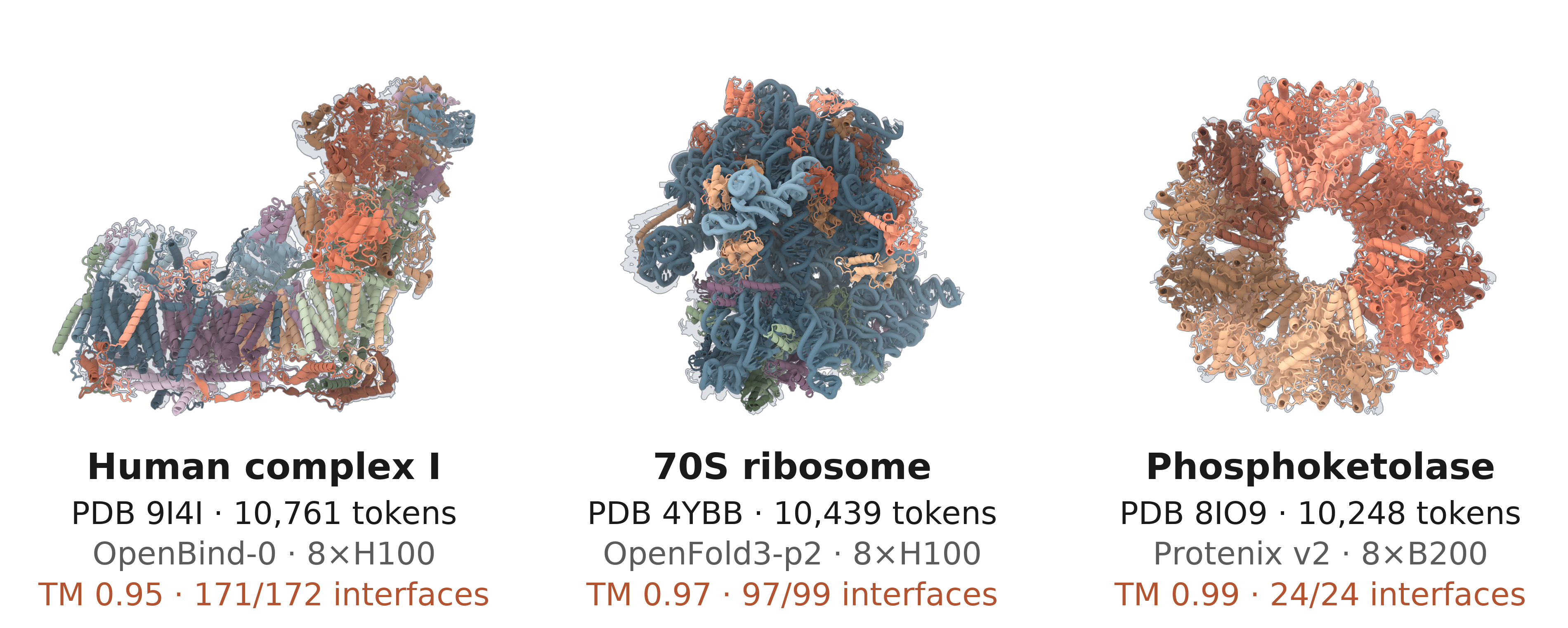
The big mode lowers memory requirements for systems above 10,000 biomolecular tokens on a single NVIDIA GPU node. Anthropic also ran inference above 70,000 tokens on one B300 node, but explicitly reports that those predictions collapsed because they were far outside the models' training context. This demonstrates computational reach, not accurate modeling at that scale.
Anthropic and Adaptyv Bio are also launching a Proteinbase competition covering five protein-design challenges, backed by up to $1 million in Claude credits and planned wet-lab validation of more than 5,000 designs. The open code gives researchers a way to test the reported speedups independently; until outside reproductions and laboratory results arrive, the performance figures remain company-reported results.
Sources: Anthropic, Anthropic GitHub, Adaptyv Bio / Proteinbase