Twenty-nine countries create an intergovernmental organization for AI cooperation and governance
Twenty-nine countries create an intergovernmental organization for AI cooperation and governance
Representatives of 29 countries signed an agreement in Shanghai creating the World Artificial Intelligence Cooperation Organization. The new body is intended to coordinate international AI cooperation and governance, but its budget, powers, enforcement mechanisms and the full set of member commitments remain unclear.
What happened
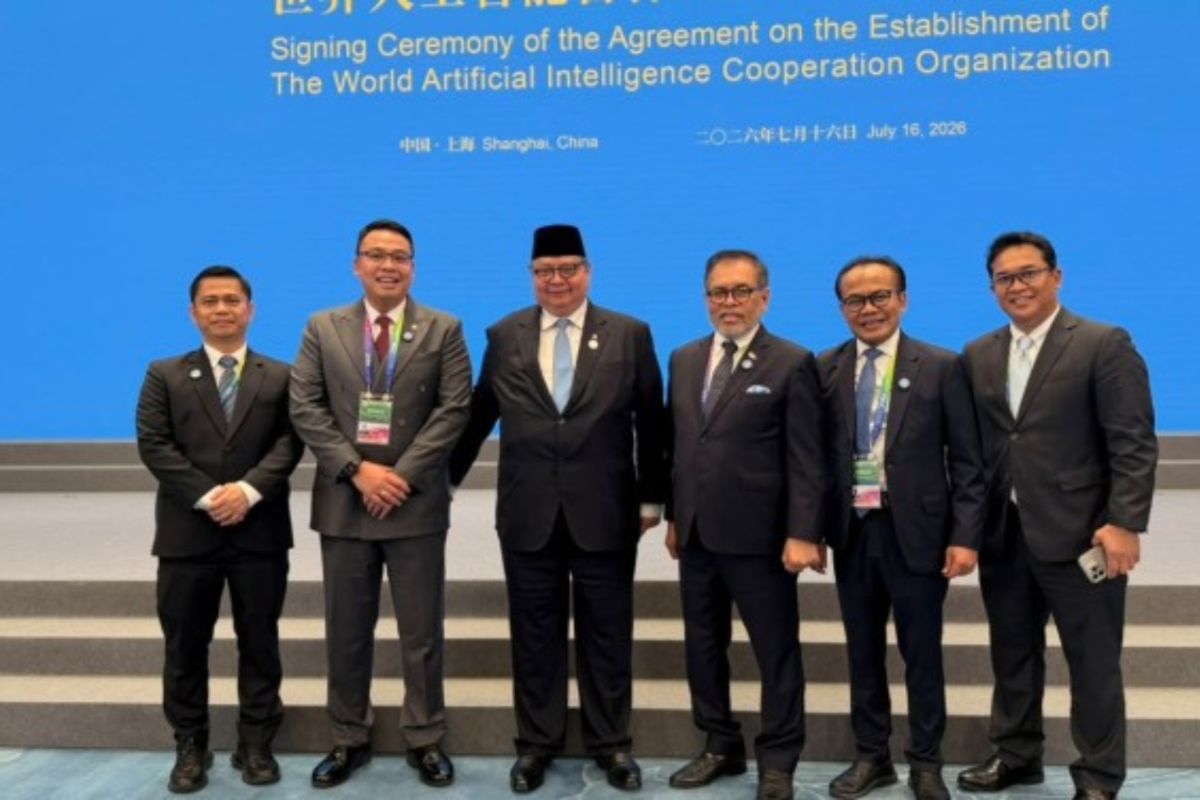
China's Ministry of Foreign Affairs said the signing ceremony took place in Shanghai on July 16, 2026. Chinese Foreign Minister Wang Yi signed for China alongside representatives of 28 other countries. The official statement names Kazakhstan, Laos, Pakistan, Russia and Indonesia among the participants.
The agreement establishes the World Artificial Intelligence Cooperation Organization as an independent intergovernmental international organization headquartered in Shanghai. According to the official description, it will follow the purposes of the United Nations Charter and promote international cooperation, global governance and AI development that its members describe as beneficial, safe and fair.
Indonesia's ANTARA news agency confirmed that Indonesia joined as a founding member. Coordinating Economic Affairs Minister Airlangga Hartarto signed following a directive from President Prabowo Subianto. Reuters also reported that 29 countries signed the agreement, although its direct page was not readable during this verification because of access restrictions.
Why it matters
Creating a formal organization is more concrete than issuing a political declaration or hosting a temporary forum. In theory, it could become a venue where governments with different technical capabilities coordinate standards, training, research, infrastructure sharing and common positions on AI safety and development.
The project also reflects competition over who shapes international rules. China presents the organization as an open, development-centered mechanism, particularly useful for countries that do not control frontier models or large computing centers. That is the position of its sponsors, not a conclusion already demonstrated through results.
For governments and companies, future decisions by the organization could affect interoperability requirements, model evaluation, infrastructure access, technology transfer and data treatment. The founding agreement, however, does not by itself create binding rules for companies outside member countries.
What changes for the AI ecosystem
The immediate change is institutional: 29 governments now have a shared structure for discussing AI cooperation and governance. Its Shanghai headquarters gives China a central role in the organization's initial administration, while participation from countries across Asia, Europe and other regions could broaden its political reach.
For countries with limited resources, such an organization could facilitate access to training, joint projects or infrastructure. For technology providers, it may create collaboration opportunities, but it could also introduce regulatory or technical expectations different from those developed in the United States and European Union.
The decisive test will be whether the organization produces verifiable instruments: published standards, funded programs, shared evaluations, technical assistance and transparent decision-making processes. Without those elements, it could remain primarily a diplomatic platform.
What remains unclear
The reviewed announcements do not provide a complete list of all 29 founders, the budget, membership fees, voting system, secretariat authority or a process for resolving disagreements. They also do not explain whether the organization will adopt binding rules, voluntary recommendations or technical cooperation programs.
Questions remain about transparency, human rights, privacy, security, compute access and participation by civil society, universities and companies. It is also unclear how the body will relate to the United Nations and other international digital-governance frameworks.
For now, what is confirmed is the signing of an agreement and the formal creation of an intergovernmental organization. Its real impact will depend on who participates, what resources it receives and what concrete decisions it makes.
Written by Lía Torres — Social and strategic perspective.
Sources consulted
China's Ministry of Foreign Affairs, the State Council/Xinhua, Reuters and ANTARA News. Exact canonical links appear in the Sources section below.
Sources: China Ministry of Foreign Affairs, The State Council of China / Xinhua, Reuters, ANTARA News